
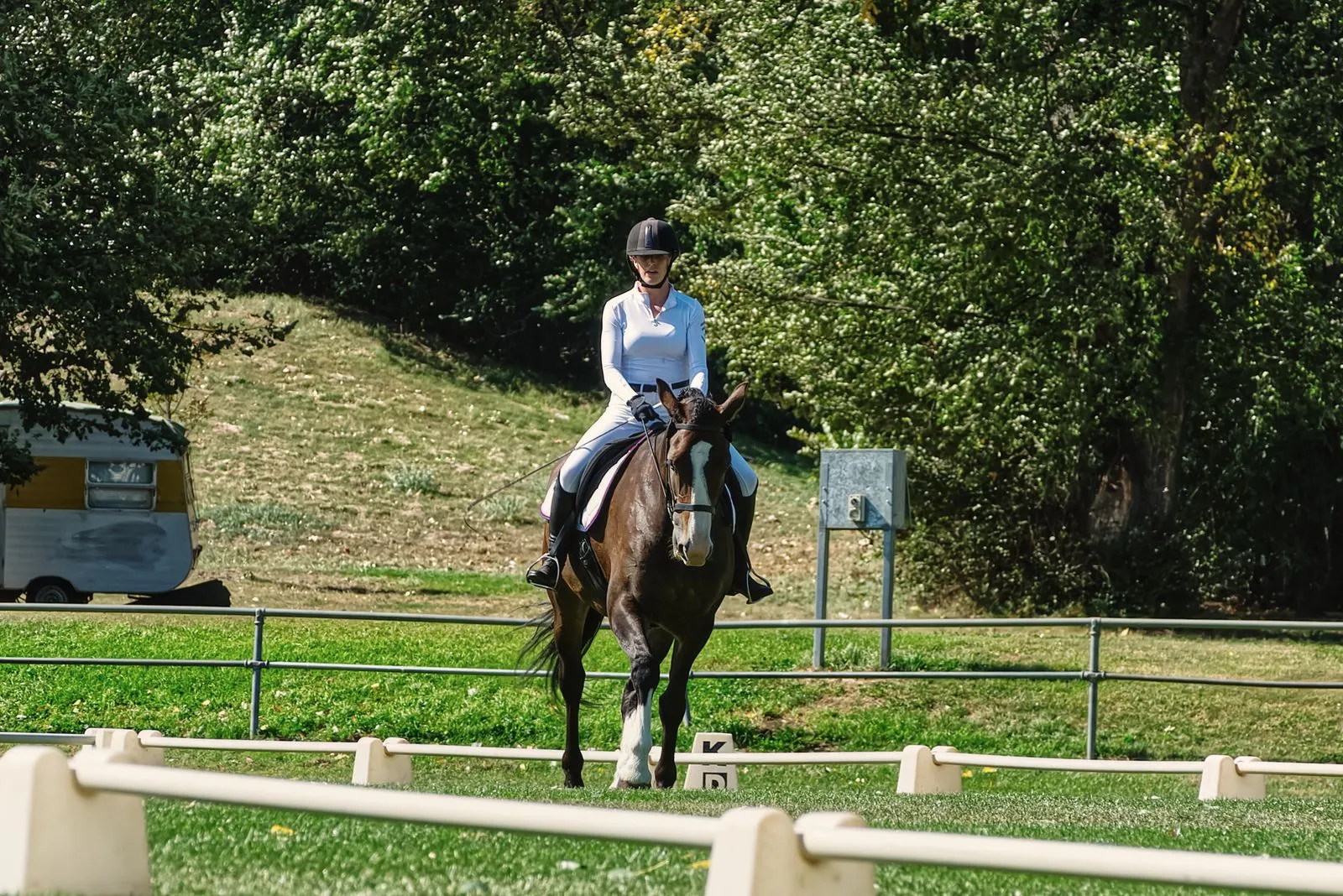
Your first riding lesson can feel exciting—and a little unfamiliar. A few simple preparations can help you focus on learning instead of worrying about what you forgot or whether you’re dressed right. Choose secure, comfortable clothing, bring a small set of useful essentials, and give yourself time to meet the horse calmly. You don’t need prior experience or special gear to get started; your instructor can explain the basics and guide you through each step.
Wear Comfortable, Secure Clothing
Choose long pants that let you move easily and reduce rubbing against the saddle. Stretchy jeans, riding tights, or other close-fitting pants can work well. Avoid shorts, loose fabric, and pants with thick seams on the inner legs, which may become uncomfortable during the lesson. Wear closed-toe shoes with a small, defined heel if you have them; sneakers or sandals are not a safe substitute for riding footwear.
A riding helmet is essential, but you usually don’t need to buy one before your first lesson. Ask the school whether it provides helmets and how to arrange a good fit. Tie back long hair, remove dangling jewelry, and choose layers suited to the weather. In Park City, conditions can shift, so check the forecast and bring a light jacket if needed.
Bring a Few Useful Essentials
Pack water, sunscreen, and any personal medication you may need. A small bag is easier to manage than a bulky backpack, and you can leave it in the designated area while riding. If the lesson is outdoors, sunglasses can help before and after your ride, but secure them so they won’t fall off in the saddle.
Arrive with enough time to check in, use the restroom, and hear your instructor’s directions before mounting. Bring questions about equipment, the lesson plan, or anything that makes you nervous. You don’t need to bring treats for the horse; feeding without permission can be unsafe, even when the gesture seems friendly.
Meet the Horse at Its Pace
Horses are large animals that notice movement and sound, so approach calmly and follow your instructor’s lead. Let the instructor introduce you and show you where to stand. Speak in a normal, relaxed voice, move deliberately, and avoid walking directly behind a horse. Don’t reach toward its face or touch it until you’re invited to do so.
You can feel more settled by noticing your breathing and focusing on one instruction at a time. Tell your instructor if you feel uneasy, have allergies, or need a little extra time. A good lesson makes space for questions and clear explanations. You’re there to learn, not to prove that you already know how to handle a horse.
Know What to Expect in the Saddle
Your instructor will typically help you with the helmet, mounting, and basic position before asking you to ride. Listen for directions about where to hold the reins, how to sit, and how to stop or turn. If you don’t understand a cue, ask for it to be repeated before trying it. Clear communication helps you and the horse stay safe.
Keep your first goal simple: follow instructions and get familiar with the horse’s movement. You may feel wobbly at first, and that’s normal for a beginner. After the lesson, ask what you did well and what to practice next time. That feedback gives you a useful starting point without needing to judge your progress against anyone else’s.
For your first riding lesson, wear comfortable long pants and secure footwear, bring water and weather-appropriate essentials, and let your instructor guide your introduction to the horse. Arrive with time to ask questions and take each step at your own pace. Contact Wasatch Horse School to ask what to bring and how to prepare for your visit.